There is no single correct answer to how many types of robots exist. Depending on how you classify them (by mechanism, degrees of freedom, application, etc) you could arrive at 3, 7, 20, or hundreds of different robot types.
What matters is knowing which classification is most useful for your specific decision around automation.
For manufacturers and engineers evaluating robots for industrial use, 3 classifications are the most useful: kinematic structure, degrees of freedom (DoF), and application.
In this guide, we explain the main types of robots and how you can use these classifications to find the right robotic system for you.
Why “How Many Types of Robots Are There?” Is the Wrong Question
A common source of confusion when researching robot types is that different articles will give you wildly different numbers. Some people say there are 3 types of robots, others say 7, and others say 20. All might be correct, depending on the type of classification used.
Researchers have identified at least 6 different classification systems for robots:
- Classification by Institutional Standards (AFR, RIA, and JIRA) — Which of the various regulated or institutional categories the robot fits within.
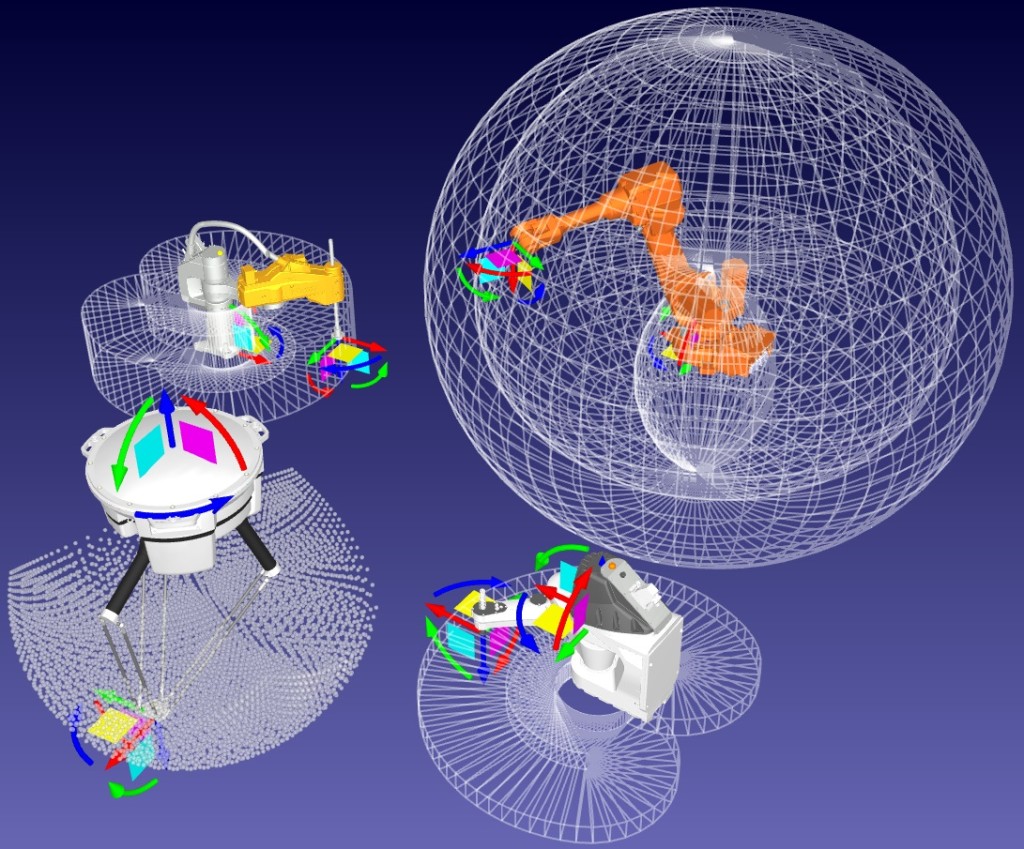
- Classification by Mechanism (Kinematic Structure) — The configuration of joints and links that make up the robot (e.g. SCARA, Delta, articulated).
- Classification by Degree of Freedom (DOF) — A number that defines how many independent parameters define the motion of the robot.
- Classification by Power Source (Actuation) — The type of energy used to power the robot (e.g. electrical, hydraulic, pneumatic).
- Classification by Workspace (Coordinate System) — The shape and volume of the workspace a robot can reach (e.g. Cartesian, Cylindrical, Spherical).
- Classification by Application — The industrial or non-industrial use case for the robot (e.g. drilling, mining, entertainment).
Some of these classifications get more attention than others. For example, you will find many more lists of robots defined by mechanism than by workspace.
Types of Robots in Manufacturing: The 3 Most Useful Ways to Define Robot Types
The most important question is… what’s the best way to classify robot types for your situation?
When you want to add robots to your manufacturing process, here are the 3 most useful classifications:
1. Classification by Kinematic Structure: A Helpful Starting Point
A common way to compare robots is to look at their kinematic structure. This is a quick and practical way to identify which type of robot could suit your automation project.
Some common robot types using this classification are:
| Robot Type | Joint Configuration | Workspace Shape | Best For |
|---|---|---|---|
| Articulated (6-axis) | RRR + 3 wrist joints | Crescent/spherical envelope | Welding, machining, assembly |
| SCARA | RRRP (3 revolute + 1 prismatic) | Cylindrical | Electronics assembly, pick and place |
| Cartesian/Gantry | PPP (3 prismatic) | Rectangular/cubic | Large parts, material handling, high precision linear tasks |
| Delta (Parallel) | Parallel closed-loop | Dome-shaped | High-speed sorting, lightweight picking |
Kinematic structure is a helpful method for comparing robots because many manufacturers list their robot models in this way.
2. Classification by Degrees of Freedom: What It Means in Practice
Degrees of Freedom (DoF) defines how many independent movements a robot can make. The minimum number required to position and orient an end effector in 3D space is 6 DoF, which is why 6 DoF manipulators dominate industrial robotics.
You can think of robot types in the following terms:
- General-purpose 6 DoF manipulators — The standard for many manufacturing tasks, these robots are suitable for a vast range of tasks including welding, machining, assembly, and pick and place.
- Redundant manipulators (7+ DoF) — Extra degrees of freedom add complexity to robot programming, but they introduce advantages like singularity avoidance and better obstacle navigation.
- Deficient-DoF manipulators (<6 DoF) — With the SCARA robots in this category, these robots are certainly not deficient in function. Fewer DoF reduces the workspace but often increases speed, accuracy, and affordability.
- Hyper-redundant robots — Less common in manufacturing, these robots have very high DoF. Common options are snake robots used for tasks like nuclear inspection in confined spaces.
3. Classification by Application: Matching the Robot to Your Task
Sometimes the most useful way to classify robots is by application. This is helpful when you are looking for fully integrated solutions designed for a specific industrial task.
Here are a few of the many applications you can apply to robotics:
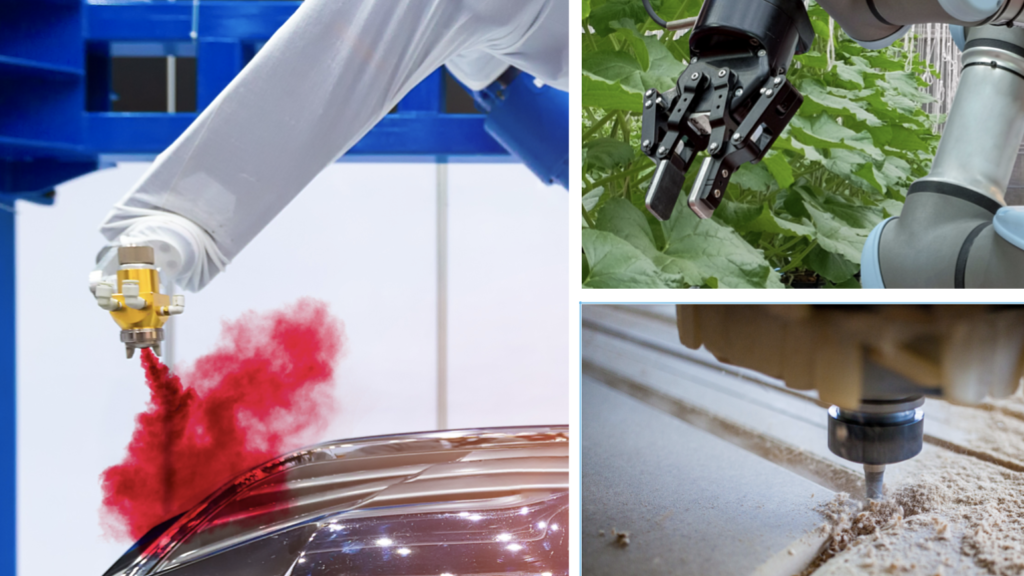
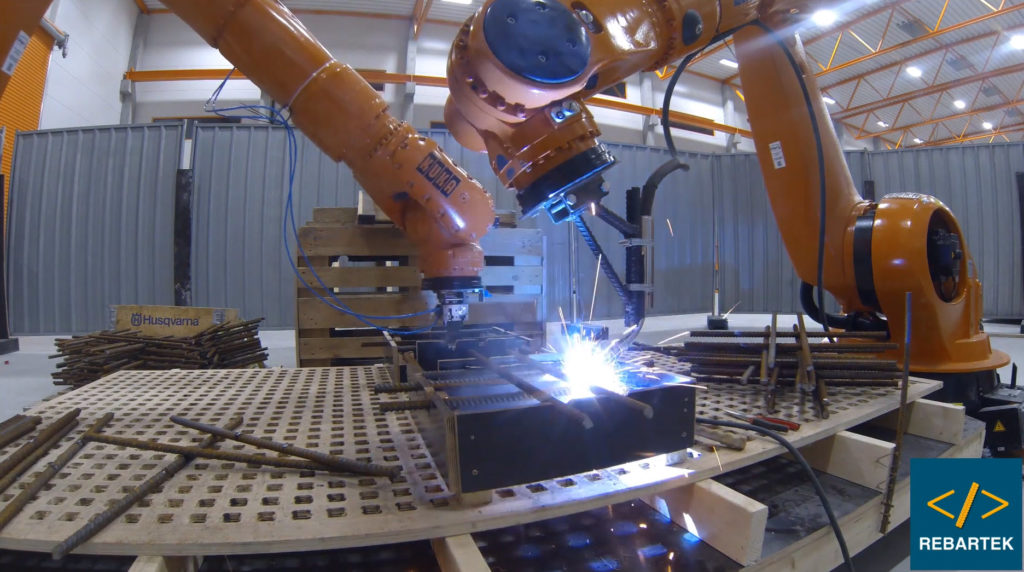
- Welding — With their precise trajectory following and compatibility with weld tools, welding robots help improve consistency and safety for welding tasks.
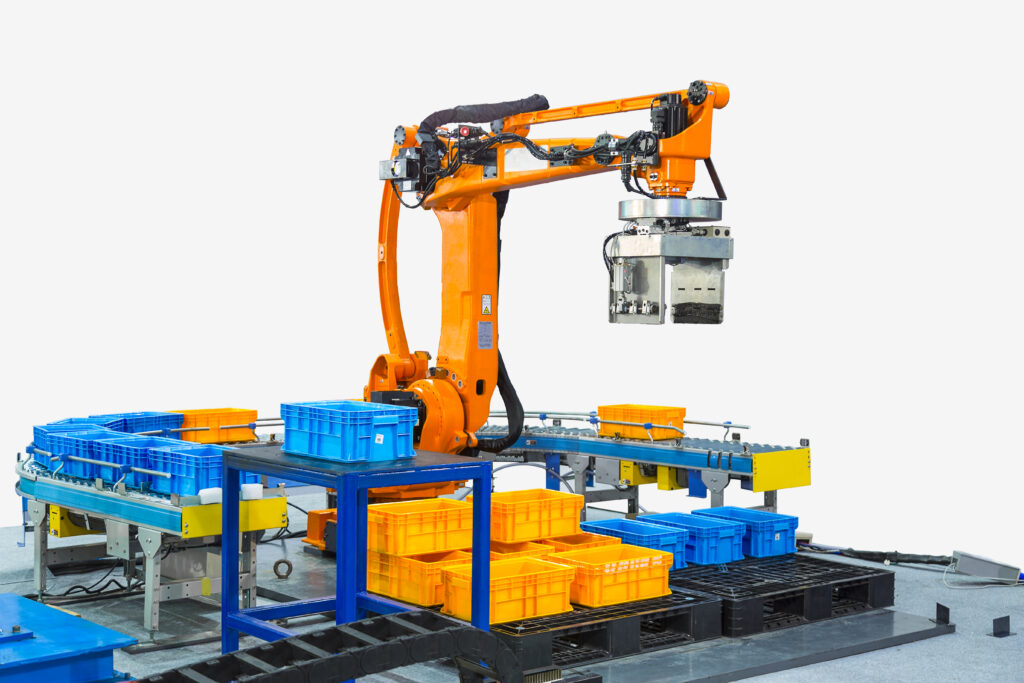
- Palletizing — While most industrial manipulators can be used for palletizing, there are also dedicated palletizing robots with high payload capacity and a fixed final DoF.
- Machining — Robots offer larger work envelopes and greater flexibility than conventional CNC machines. With the new wave of high-stiffness models, robot machining is now capable of machining harder materials.
- Inspection — Vision-guided robots help identify defects, measure tolerances, and sort products for product inspection.
- Painting and surface finishing — Robots apply coatings, paints, and adhesives with consistent coverage. Explosion-proofing is an extra requirement specific to painting robots.
Remember that most robot manipulators can be applied to different applications. Just because you bought a robot for one job doesn’t mean it has to always perform that task if your needs change in the future.
Choosing the Right Robot Type: A Decision Framework
How can you decide which type of robot is right for you?
Choosing the right robot type is easier when you work through the decision in the right order:
- Start with your application — Clarify your task first. Many applications have multiple valid robot solutions. For example, SCARA robots are common for pick and place, but you could also use Delta robots, 6-DoF manipulators, or something else depending on speed, payload, and workspace requirements.
- Test options in simulation before buying — With RoboDK, you can quickly and easily compare different robot models within the same task in a virtual environment. This gives you confidence that you’re making the right choice before committing to hardware.
- Decide on kinematic structure — By this point, you should have a good idea of the right kinematic structure for your task. In turn, this will constrain your DoF options.
- Select your manufacturer and model — Finally, decide on the model you will buy. Use the RoboDK Robot Library to find compatible models and load them directly into your simulation.
Remember, the right robot is the one that works for your task, fits your facility, and that your team can confidently program and adapt over time.
Which type of robot does your task need? Tell us in the comments below or join the discussion on LinkedIn, Twitter, Facebook, Instagram, or in the RoboDK Forum.. Also, check out our extensive video collection and subscribe to the RoboDK YouTube Channel