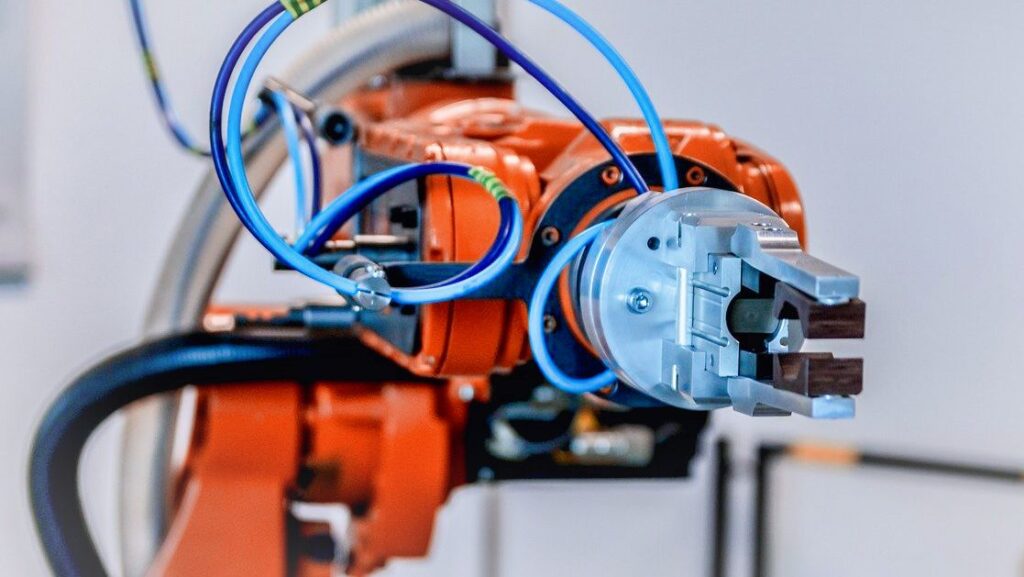
Pick and place is one of the most widely deployed robotic applications in industrial automation. If you are evaluating tasks to automate, pick and place is often the quickest win in terms of high ROI.
A pick and place robot lifts an object from a defined location and moves it to another location — consistently, at speed, and around the clock. The task is common across industries, including manufacturing, logistics, and packaging.
With the right pick and place solution, most companies can achieve faster cycle times, more consistent operation, and a measurable ROI within just a few months.
This guide explores the various factors that determine which pick and place system is right for you, including payload, speed, precision, and programming options.
Commercial Robot Pick and Place Solutions: What Decision-Makers Actually Care About
If you are researching robotic pick and place solutions right now, you’re not looking for a basic lesson in robotics. You are doubtless trying to answer specific questions about your pick and place task.
You might have questions like:
- How much throughput can we realistically gain by adding a robot?
- Answer: It depends. You should test your specific in simulation before purchasing a solution.
- How long will the robot integration disrupt production?
- Answer: For simple pick and place, maybe only a few days. For more complex tasks, longer. However, there are reliable ways to minimize integration time.
- Will this pick and place solution handle future product changes?
- Answer: Yes, if you design the system for adaptability and agility.
In modern facilities, pick and place automation is not experimental. It’s tried-and-tested infrastructure.

Your specific questions will depend on your situation and needs. Companies just like yours are deploying pick and place solutions for a wide range of task from high-speed packaging to CNC machine tending.
Which Robot Type Is Right for Your Pick and Place Task?
Choosing the wrong type of robot wastes money, as well as reducing the benefits you can get from your robotic solution. Various robot types can be used for pick and place tasks.
Here’s a direct comparison of some of the top systems used in pick and place automation:
| Robot Type | Example Application | Speed | Payload | Common Industries |
|---|---|---|---|---|
| Delta | Lightweight, high-speed sorting | ★★★★★ | Low (0.5–3 kg) | Food, pharmaceutical, electronics |
| SCARA | PCB assembly, small parts | ★★★★ | Low–medium (up to 20 kg) | Electronics, medical devices |
| Articulated (6-axis) | Versatile tasks, complex paths | ★★★ | Wide range (3–500+ kg) | Everywhere! And general manufacturing |
| Cartesian/Gantry | Large, heavy, precise loads | ★★ | High (50–1000+ kg) | Metal fabrication, logistics |
It’s also important to ask if you need your robot to be collaborative. Collaborative robots are designed to operate safely around humans and are a popular option for some pick and place tasks.
5 Pick and Place Applications That Are Worth Automating First
Not all pick and place tasks are equal in terms of return on investment (ROI).
If your current project is your first robotic pick and place deployment, it’s worth choosing a task that will pay for itself quickly. This creates a firm foundation from which you can then grow future automation projects.
Some of the highest-value pick and place applications include:
- Product Sorting — Arranging products on a moving conveyor or fixed table is often a quick task to deploy with a clear, measurable impact. The quickest wins do not require complex sensing or sorting algorithms.
- Case Packing — Picking finished goods from a line and placing them into a box or tray is one of the most common and repeatable tasks in manufacturing. It is predictable, high-volume, and straightforward to program.
- Machine Tending — Loading and unloading CNC machines and other semi-autonomous machines with a robot can be a game-changer. It eliminates costly idle machine time and allows continuous production.
- Palletizing/Depalletizing — A [hugely popular task for robots][RKPALLET], stacking of packaged goods onto pallets provides far more benefits than just increased productivity. It also helps reduce harmful musculoskeletal injuries for workers.
- PCB and Electronics Assembly — Popular in electronics manufacturing, placing components onto printed circuit boards (PCBs) is a high-value task that is relatively simple to program.
These types of tasks are simple to deploy and immediately valuable. Applications like bin picking — unstructured part picking from containers using 3D vision — are possible, but also introduce complexity, so are better for later deployments.

Buy for Scalability and Flexibility, Not Just Speed or Cost
A robotic pick and place system is rarely a onetime purchase. When you choose the right solution, it becomes a core part of your production architecture and a driver for growth.
Be wary of fixed automation. In the modern landscape, nothing is fixed. Markets shift. Customers change. Product lines evolve.
The right pick and place solution will become a valuable asset to your company’s agility… but only if you purchase a system that allows for scalability and flexibility right from the start.
For pick and place specifically, this means evaluating three things beyond the hardware spec:
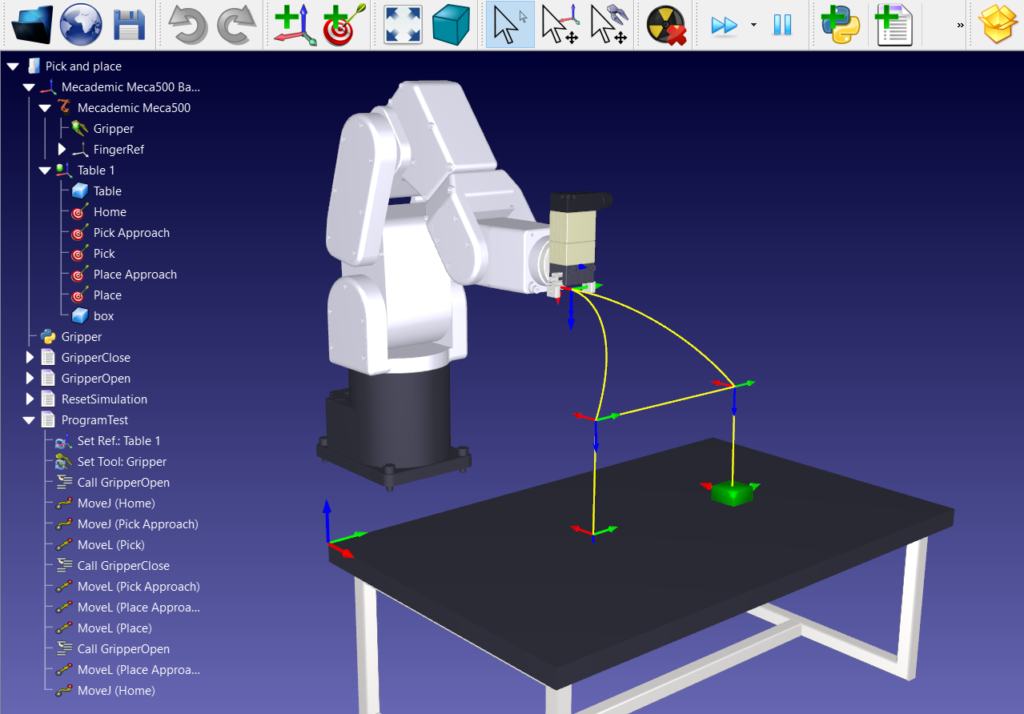
- How quickly can the system be reprogrammed for a new task or product variant? With offline simulation software like RoboDK, reprogramming a pick and place task can take hours rather than days — without taking the physical robot out of production.
- Is the system tied to a single robot brand? Vendor lock-in is a common issue in the robotics industry. It can significantly limit your options as your operation scales. A programming platform that supports multiple robot manufacturers gives you genuine flexibility when it’s time to expand.
- Can your team adapt the robotic system without specialist intervention? The more your team can own the programming and adjustment process, the more agile your operation becomes.
Choosing a Pick and Place Automation Partners
The right automation partners do more than supply a robot — they help you select the right system, simulate it before deployment, and support your team as your needs develop.
RoboDK provides the software layer that makes this possible: a vendor-agnostic programming and simulation platform that works across 900+ robot models, reduces integration risk, and keeps your team in control of the process from day one.
Try a free trial version of RoboDK.
What pick and place task would you like to deploy? Join the discussion on LinkedIn, Twitter, Facebook, Instagram, or in the RoboDK Forum.. Also, check out our extensive video collection and subscribe to the RoboDK YouTube Channel