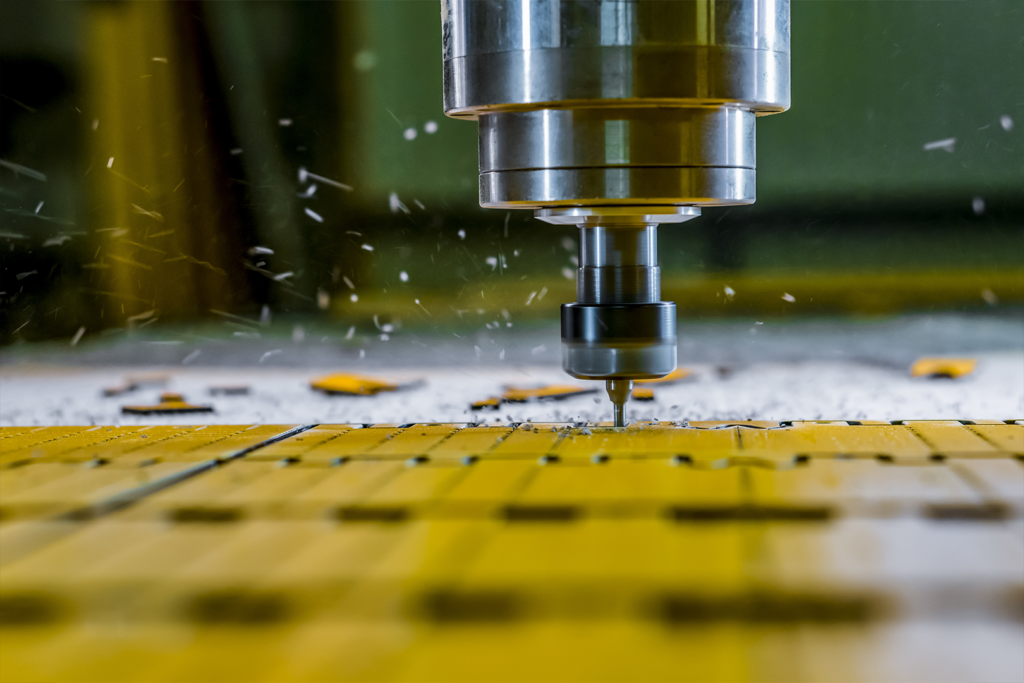
Which is better, climb milling or conventional milling? This classic question becomes even more important when we’re talking about robotic machining.
The debate of climb vs conventional milling has been going on for a long time between machinists. Climb milling generally produces a better surface finish, while conventional milling can offer more stability.
For robotic machining, the question becomes a lot more interesting!
Unlike conventional CNC machines, robot arms tend to be less rigid, use compliant force-control tooling, and operate on more complex free-form parts. The old rules for CNC don’t automatically transfer.
In this article, we draw from some of the limited robotics research on climb vs conventional milling and help you understand which is better for your robot machining cell.
What is Climb Milling vs Conventional Milling?
Climb milling and conventional milling are both strategies for coordinating the cutting tool’s motion along a workpiece. Simply put, climb milling involves the cutter “climbing” onto the material by rotating in the direction of motion. In conventional milling, the cutter rotates in the opposite direction.
Choosing between these strategies involves balancing a few competing trade-offs:
Climb Milling: Smooth Finish and Longer Tool Life
A simple way to remember climb milling (also called down milling) is that the cutter and the feed are moving in the same way as the workpiece.
As the cutter moves along the workpiece, each tooth of the cutting tool bites directly into the material at the full thickness. Because the cutter is effectively “climbing” onto the material in the direction that is already moving, the removed chips of material get thrown behind the cutter.
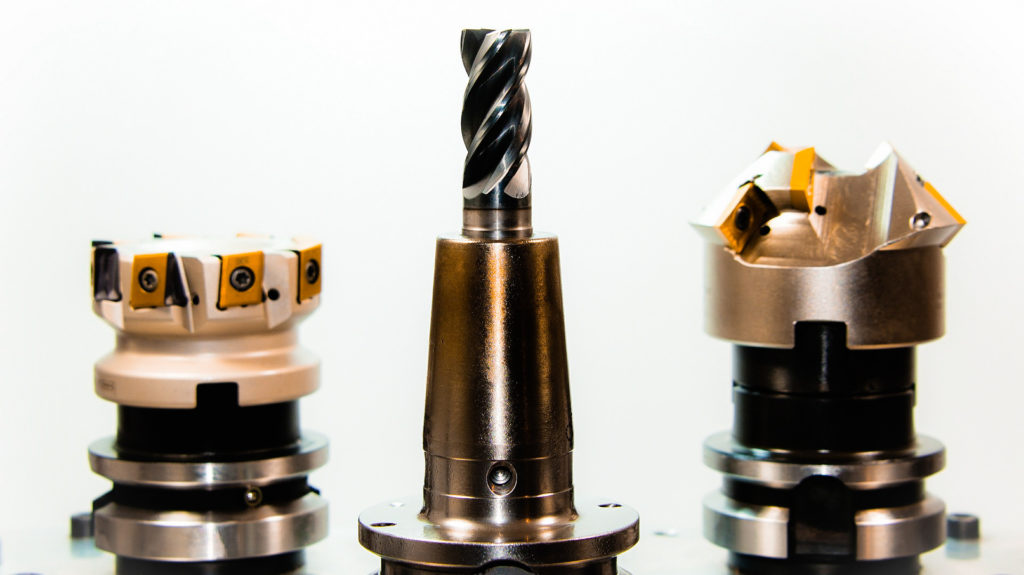
Advantages of climb milling are that it produces a smooth finish, longer tool life, lower cutting loads, and less heat generation. However, this strategy produces more vibrations and backlash and is unsuitable for harder materials.
Conventional Milling: Stability for Hard Materials
Conventional milling (also called up milling) is when the cutting tool rotates against the direction of the feed.
Each tooth of the cutting tool starts cutting with almost no material engagement. Gradually, this increases to the full chip thickness before the cutter tooth exits the material. Because the cutter is working against the feed direction, the chips are pushed into the cutter’s path rather than away from it.
Advantages of conventional milling are no backlash, greater stability, and more control. However, it also produces excessive heat generation and a rougher finish, as well as shortening the life of the tool.
Which is Better for Robotic Milling? Climb or Conventional
Almost all the established guidance on whether you should choose climb or conventional milling comes from research and expert experience into CNC machines.
Robotic milling is a newer application with comparatively little dedicated research. This means that our industry hasn’t come up with any clear rules about which you should choose in any particular robotic application.
What does this mean for you? You need to make your own tests between the two strategies for your specific milling application.
What the Limited Robotics Research Shows
One of the few scientific research studies into this topic compares climb and conventional strategies for robotic milling of a plastic workpiece.
The researchers used an industrial robot fitted with a radially compliant deburring tool. In this case, they found that the climb milling approach was more efficient than conventional milling, producing a better surface finish and lower forces.
But this is not a very surprising conclusion. It’s also worth remembering that plastic milling will produce far fewer vibrations than, say, hardened metal.
Conclusion? There’s not enough solid research to tell yet which approach is best.

A Practical Framework for Choosing Your Milling Strategy
Given that robotic milling is still fairly new and there’s limited research evidence, how can you decide about the right strategy for you?
The most useful approach is to start with established CNC principles and then adapt them for your robotic setup.
Some general tips include:
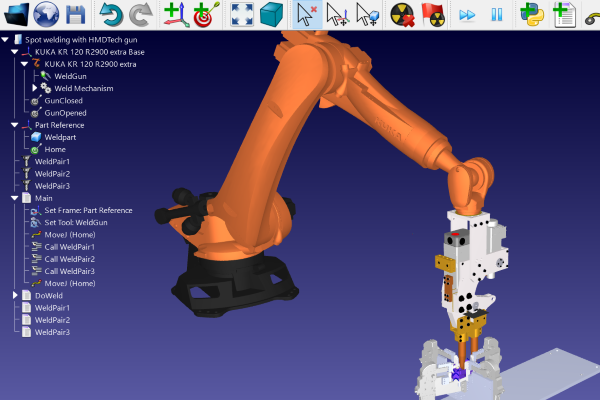
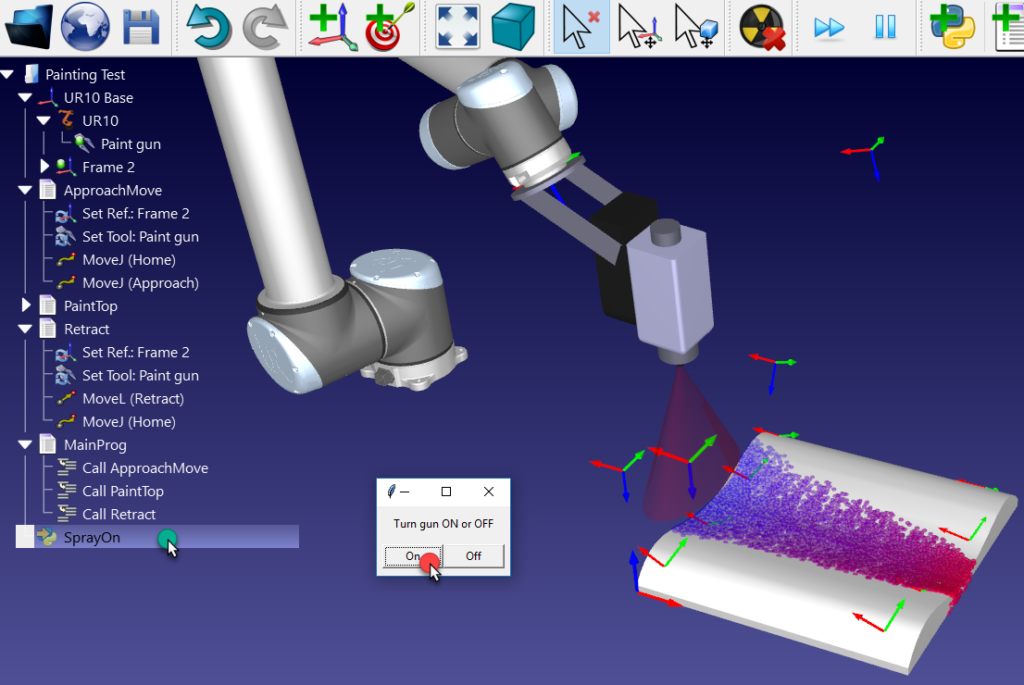
- Test in a robotics-first simulator — A good first step is to start by testing your application in a simulation tool. RoboDK-CAM is a complete robotics programming software with an integrated CAM tool.
- Start with climb milling as your default — If your robot has good rigidity and you’re working with a clean, non-hardened surface, climb milling is a smart strategy to test first. The standard CNC guidance and the robotic deburring research we introduced above supports this.
- Consider conventional milling for hardened materials — Machinists advise that conventional milling tends to be necessary for flame-cut, oxidised, or hardened materials, as the climb approach would force the tool to repeatedly impact a hard outer layer .
- Watch for chatter on thin or unsupported sections — Monitor the tool to ensure that there is not excessive chatter or vibration on thin or unsupported sections of the material. Here, conventional milling may offer better stability, just as it does on CNC machines.
- Treat compliant or force-controlled end effectors as a different variable — Robotic milling tools that include compliance and flexibility will behave differently from standard CNC machines, so remember to consider this in your tests.
Use Robotic CAM Software to Test Milling Strategies Before You Commit
Of all the tips above, testing is perhaps the most important.
With RoboDK-CAM, you can test your robotic milling project in a simulated environment before you send it to the physical robot, helping you to smooth out potential issues early in deployment.

RoboDK-CAM is built exactly for this type of robotic deployment. Its toolpath generation features support up to 12 synchronized axes with finishing, surfacing, and contouring strategies that help you test every aspect of your robotic milling project.
For more information, check out the RoboDK-CAM product page.
Which milling strategy do you use most often? Join the discussion on LinkedIn, Twitter, Facebook, Instagram, or in the RoboDK Forum.. Also, check out our extensive video collection and subscribe to the RoboDK YouTube Channel