Schneider Electric is a well-established multinational corporation specializing in energy technologies, digitalization and automation. Could the company’s impressive range of industrial robots be the right choice for you?
If you’re looking for robots that work as part of a larger connected system of technologies, Schneider’s Lexium brand robots are definitely worth a look. With the right programming software, you can simulate them easily before even purchasing the robot.
Let’s see why Schneider Electric’s robotic offerings excel at easy-integration…
The Schneider Story: From Energy Management to Smart Machines
Schneider Electric is best known for its energy management solutions. However, the company has been building robots for almost two decades.
In around 2007, Schneider introduced a line of servo-controlled embedded robots that were fully integrated into machine automation for the consumer goods industry. The company’s later robotics lines evolved into a “smart machine” concept based around the company’s EcoStruxure machine, an IoT-ready architecture that connects robots, drives, and analytics.
In 2023, Schneider selected JAKA Robotics as its exclusive collaborative robot partner. As well as collaborating on their line of collaborative robots, the two companies are building a joint service center for their global customers.
Companies Providing Advanced Robotics for Smart Factories
According to recent industry figures, more than half a million industrial robots were installed globally in 2025. But robots alone are not the only components that make a smart factory, as Schneider knows well.
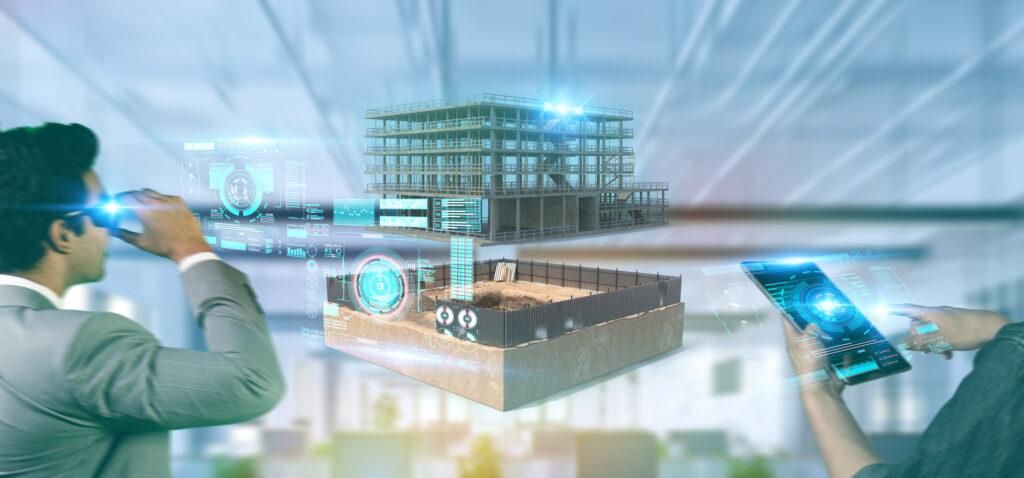
Manufacturers increasingly want robots that seamlessly connect to their entire control, data, and energy systems. Many robotic manufacturers sell only the robot itself. Schneider is one of the few companies that cover the entire automation stack.
| Automation Layer | Schneider Solution |
|---|---|
| Robot arms | Lexium Cobot, SCARA, T/P |
| Motion control | PacDrive 3, LMC402/802/902 controllers |
| Product transport | Lexium MC12 Multi Carrier |
| Digital twin | EcoStruxure Machine Expert Twin |
| Supervision | SCADA and performance analytics |
| Energy management | EcoStruxure platform |
This connected ecosystem of products makes Schneider a good fit for process automation, where robots have to work alongside PLCs, other automation machines, and supervisory and analytical software.
Where Schneider Robots Are Making an Impact
Schneider serves dozens of industries with its products. For robotics, key industries include food and beverage, semiconductor manufacturing, life sciences, logistics, and automotive.
Here are two examples of case studies from the company’s own catalog that show how they are combining components to create connected solutions:
Case Study: A Flexible Automatic Line
The company’s own components factory needed a single production line to assemble seven different push buttons, each with up to 31 parts. To achieve this, the team’s engineers combined Lexium SCARA robots, collaborative robots, and T/P robots with their MC12 multi-carrier mobile platform and a digital twin.
This resulted in a reduction of the line’s footprint and investment by three times, as a single flexible machine replaced what was previously three separate assembly lines.
Case Study: Reusing Semiconductors
An OEM company found that they were too reliant on semiconductor supply chains and produced too much e-waste.

To solve this, the company combined Lexium cobots, SCARA robots, digital twins, and artificial intelligence to produce a system that desoldered and recovered microchips from used circuit boards. This aligns well with Schneider’s ongoing dedication to sustainable automation.
Programming Options for Schneider Electric Robots
There are three main options you have when you want to program a Schneider robot:
- EcoStruxure Machine Expert — Core to many of the company’s machine components, EcoStruxure provides a single software environment for developing, configuring, and commissioning machines. For example, the Lexium SCARA robots are configured in Machine Expert and controlled through Schneider motion controllers. It supports various programming languages including ladder, structured text, and function block diagrams.
- Tablet and Hand-Guiding — Lexium Cobots use graphical drag-and-drop programming on iOS or Android tablets. You can also teach them by hand guiding which involves moving the robot arm by hand.
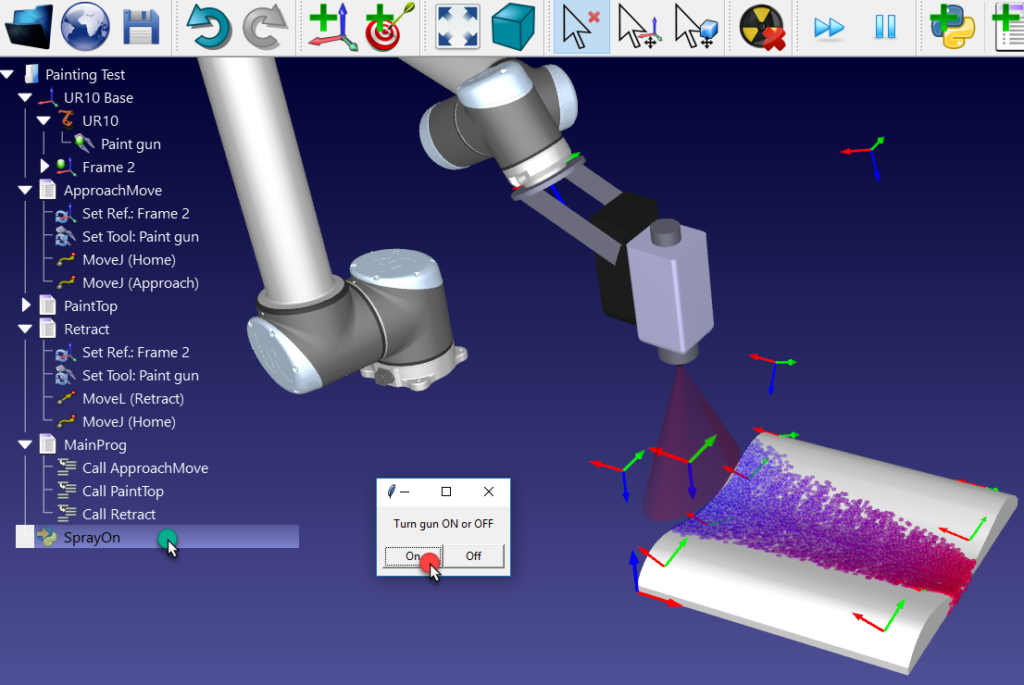
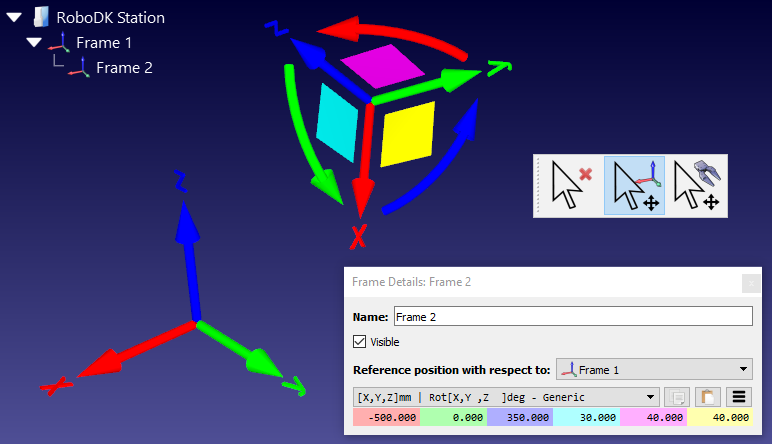
- RoboDK Offline Programming — With RoboDK, you can program and simulate Schneider robots on your computer without stopping production. RoboDK provides a comprehensive set of functionalities, including collision detection, multi-robot setups, and seamless CAD/CAM integration.
Spotlight on 3 Models in the RoboDK Library
Schneider Electric offers three families of industrial robots under its Lexium brand:
- Lexium collaborative robots — These range from 3 to 18 kg in payload and are produced in collaboration with Jaka Robotics.
- Lexium SCARA robots — Ideal for high-speed assembly.
- Lexium T/P Delta robots — Suited to even higher speeds, with an ideal application in packaging.
The RoboDK Robot Library includes several Schneider Electric models, including the following:
Robot 1: Lexium SCARA LXMRSP0660300

The Lexium SCARA is an all-in-one robot with its controller built in, which reduces wiring and cabinet space.
The robot has a 6 kg payload, 600 mm reach, and repeatability of 0.02 mm. It also has a top speed of 7,750 mm/s, making it ideal for pick and place, assembly, and packaging tasks.
Download the LXMRSP0660300 model from our Robot Library.
Robot 2: Lexium Cobot LXMRL18S0000

Coming in at the higher payload end of the company’s cobot range, this Lexium can be mounted on the wall, floor, or ceiling and detects collisions through its built-in torque feedback. It’s well suited to tasks like palletizing, machine tending, and welding.
The robot has a payload capacity of 18 kg, a reach of 1,073 mm, and a repeatability of 0.02 mm.
Download the LXMRL18S0000 model from our Robot Library.
Robot 3: Lexium Cobot LXMRL03S0000

At the smaller end of Schneider’s cobot range, this Lexium cobot weighs only 12 kg, making it a good fit for light assembly tasks, gluing, and part handling, as well as applications that require it to be moved between workstations.
The robot has a payload capacity of 3 kg, a reach of 626 mm, and a repeatability of 0.02 mm
Download the LXMRL03S0000 model from our Robot Library.
Simplifying Schneider Robot Programming with RoboDK
Schneider robots are designed to live inside connected ecosystems of machines. By using RoboDK as your robot programming solution, you can design, test, and update your automation process before you even purchase any of the robotic hardware.
Within RoboDK, you can check that your chosen robot model has the desired reach and payload that you need for your real cell layout, estimate cycle times, and use many more features. With the RoboDK API, you can add advanced functionality.
To get started, download a trial copy of RoboDK and load your chosen Lexium model from the library.
Which Schneider Electric robot best suits your application? join the discussion on LinkedIn, Twitter, Facebook, Instagram, or in the RoboDK Forum.. Also, check out our extensive video collection and subscribe to the RoboDK YouTube Channel