Robotic grinding involves using an industrial robot arm to automate abrasive cutting for machining or surface finishing. We explore what robot grinding is and how you can find the right system to achieve the best results for your application.
If you are a manufacturer with high-volume or precision grinding operations, robotics are almost certainly a worthwhile investment. Robots consistently outperform manual grinding for surface finishing, and there are a huge number of systems available to suit a range of grinding needs.
With the right configuration of robotic technology and programming software, you can improve throughput, abrasive efficiency, and worker safety.
What Is Robotic Grinding Technology?
Robotic grinding involves combining an industrial robot with grinding equipment, control systems, sensors, and a workpiece positioning system to automate the surface finishing of complex geometries.
The first robot grinding systems date from the early 1990s, but the technology has advanced significantly since then. Modern grinding solutions incorporate AI algorithms, advanced sensing, and many more technologies to improve the quality and consistency of the resulting surface finish.
One way to look at grinding robots is to consider two separate structural types:
- Tool-type grinding robots — Here, the robot holds the grinding tool or the tool operates as an end effector, bringing it to a fixed workpiece. It’s useful when grinding heavy, large, or otherwise difficult-to-move workpieces.
- Workpiece-type grinding robots — Ideal for smaller, lighter grinding. This involves the robot holding the workpiece and moving it towards a static grinding tool. This makes the application compatible with conventional fixed grinding machines.
An interesting example of workpiece type grinding came from RoboDK users, Automax Robotics for IIHL, who used a FANUC robot to move parts through four sequential Lancer belt grinders.
Why Robotic Grinding Is Now a Manufacturing Necessity
Like many robotic applications, a key benefit of automated grinding is consistency.
It is notoriously difficult to achieve a high-quality, consistent surface finish with manual grinding. Human operators bring many unique skills, but a human arm will never be as precise as a robot’s, especially when holding a heavy, vibrating grinding tool.
In addition to the consistency benefits, current trends in manufacturing automation reveal that 3 key forces are driving the adoption of robotic grinding:
- Labor shortages — Manual grinding is physically demanding and requires a high skill level. It’s getting harder and harder to recruit and retain skilled grinding technicians because of labor shortages. Robots help to ease the strain on the company’s existing grinding workers.
- Safety and regulatory pressures — The health and safety effects of manual grinding make it harder to justify subjecting human workers to this task when robots are a possibility. Grinding the robot moves workers away from hazards like vibration, airborne dust, noise, and lacerations.
- Reduced cost of non-conformities — Inconsistent grinding leads to scrapped parts, reworks, and unnecessary waste. This means that the return on investment (ROI) of robotic grinding is even more appealing than other robot applications because it eliminates these hidden costs.

Finding the Best Robotic Systems for Grinding: What to Look For
What should you be looking for when trying to source a robotic system for grinding?
Here are four components to consider when purchasing a grinding robot:
1. The Robotic Manipulator
The most common type of industrial robot used for grinding is a 6 Degree of Freedom (DoF) industrial manipulator. In particular, the stiffness of the robot and the amount of force it can apply are the most important factors to consider.
Due to the high level of force the robot must apply to the workpiece, it is likely you will need a larger, heavier robot than for applications like pick-and-place or assembly.
2. Active Compliance and Force Control
Perhaps the most important feature for grinding is force control. Without this, the robot position can deflect when applying force, leading to an inaccurate path.
Active compliance for grinding is becoming impressively advanced in modern robots. For example, the Contact Intelligence feature from company FerRobotics, which we saw at a recent Automatica uses a unique system to maintain constant contact pressure in real time.
3. Tooling and Abrasive Selection
Abrasives and grinding tools are a key consideration when buying a grinding robot. The right abrasive will last a long time and will wear down in a predictable way.
One way to ensure you’re picking the right abrasives for the task is to do data-driven abrasive testing before deploying the grinding robot to your process.
4. Fixturing Support
Reliable fixtures are a sometimes overlooked foundation for any robotic grinding cell. If the workpiece shifts during operation, the quality of the surface finish will be significantly reduced
Whether you are using custom-built or off-the-shelf fixtures, consider these from the beginning of your robotic deployment
How Robotic Grinding Cells Improve Manufacturing Efficiency
What process improvements can you expect when you have chosen the correct robotic grinding solution?
Here are a few benefits you can gain from using a well-designed robotic grinding cell:
- Increased Throughput — Over the course of an entire workday, a robot will increase the throughput of a grinding cell. Robots don’t experience fatigue and maintain consistent cycle times day in and day out.
- Long, Predictable Abrasive Life — Thanks to the precise and consistent force that robots apply to the workplace, you can increase the working lifetime of abrasive media. In turn, this creates easier and more predictable maintenance.
- Reduced Waste — Consistent surface quality reduces the number of parts that require rework or scrap. This is better both for sustainability and for your costs.
- Easy Scalability — Once your first grinding robot is running effectively, you can easily copy and paste the design to a second grinding cell. You can also reprogram these cells quickly to account for changes in product design, as long as you’re using the right robot programming software.
- Streamlined Software Workflow — By using a dedicated robot machining tool like RoboDK-CAM you can integrate robot programming easily with your existing design software workflow.
Getting Started with Robotic Grinding Using RoboDK
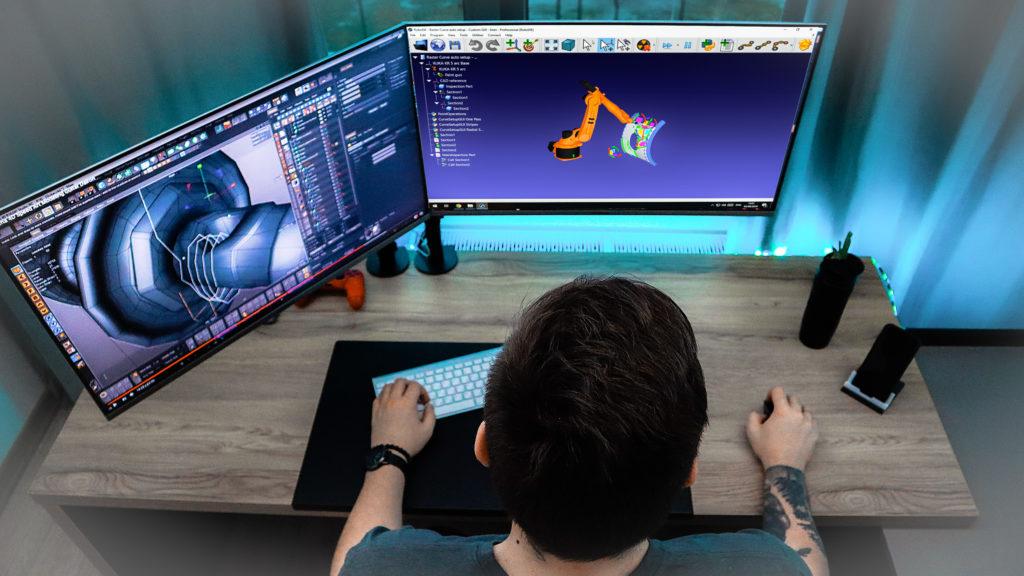
If you want to get started with robotic grinding quickly and effortlessly, RoboDK-CAM is a great tool to help you get started. It allows you to visualize and validate your robotic motion paths before even purchasing a physical robot, then program the robot using your 3D CAD designs.
To learn more about RoboDK-CAM, check out the product page.
What grinding application would most benefit from a robot in your business? Join the discussion on LinkedIn, Twitter, Facebook, Instagram, or in the RoboDK Forum.. Also, check out our extensive video collection and subscribe to the RoboDK YouTube Channel