Robot 3D printing combines the flexibility of multi-axis industrial robotics with the endless possibilities of additive manufacturing. But is robot 3D printing right for your manufacturing process?
Additive manufacturing has turned certain manufacturing process on their head. With adoption across a wide range of industries, including aerospace, construction, automotive, and consumer goods, robot 3D printing is the next exciting step.
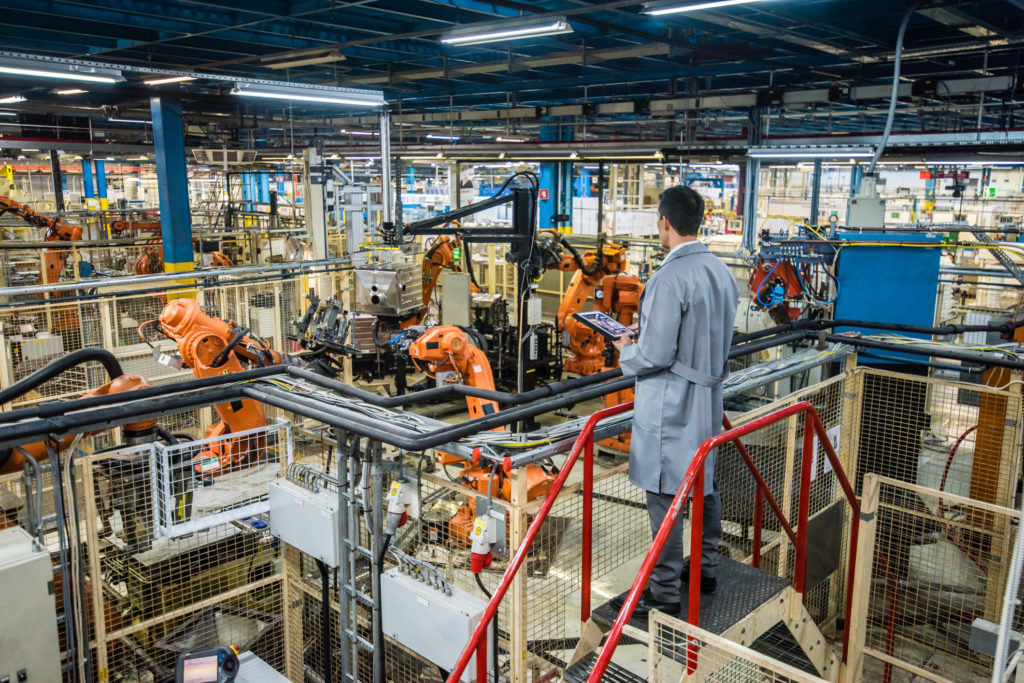
Unlike conventional 3D printers, robots offer enormous benefits to manufacturers, allowing you to create prints of impressive size and complexity.
Let’s have a look at what you need to know when you are considering investing in robot 3D printing…
How Robotic Arm 3D Printing Works
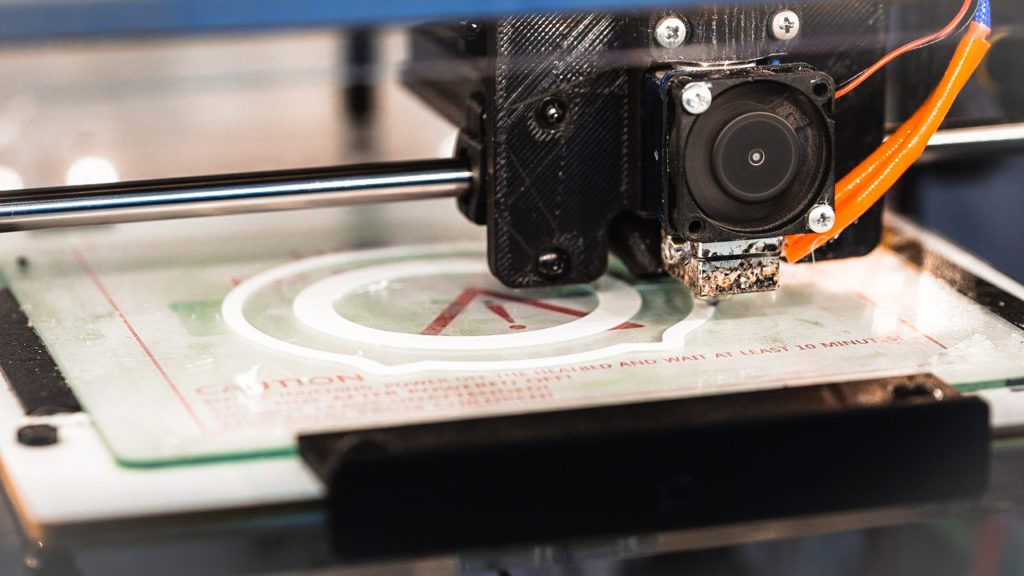
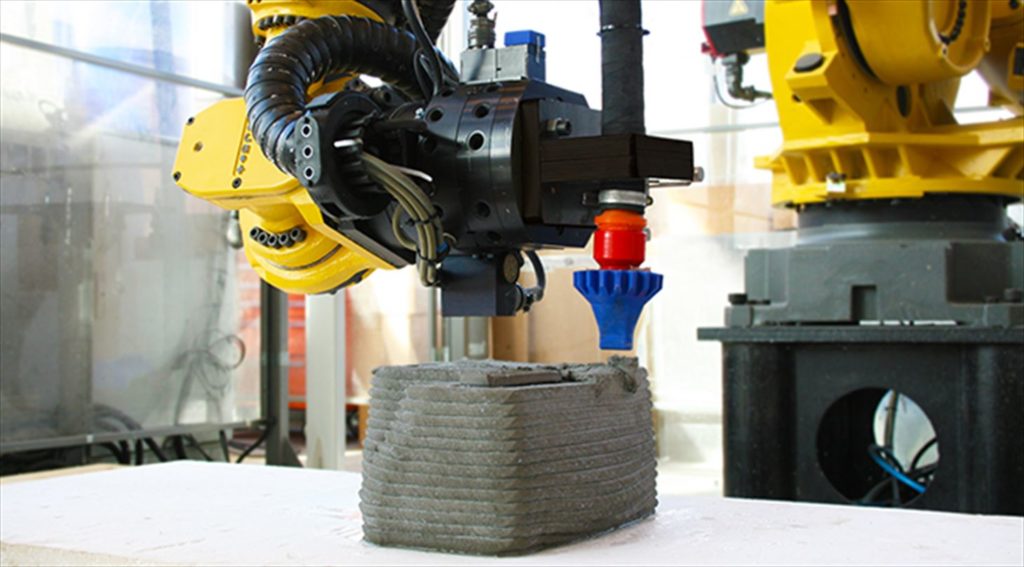
Like conventional additive manufacturing, robot arm 3D printing works by depositing or extruding thin layers of material, layer by layer, to gradually build a solid object. Unlike fixed-axis machines, a robot arm can print from any angle at any scale without the workspace constraints that limit conventional machines.
Most robotic 3D printing follows a common workflow process:
- CAD Model Creation — You start by creating a 3D digital model of your desired product or workpiece in CAD software.
- Digital Model Slicing — Software with 3D printing features, like RoboDK-CAM]RKCAM, slices the model into layers and generates G-Code toolpaths that are understood by machining tools.
- Robot path conversion — This key step for robotic machining involves turning G-code into the robot’s native programming instructions. In RoboDK, this is done by the post-processors for your robot model you can find in our extensive library.
- 3D Printing Process — During printing, the robot moves the extruder, laser head, or deposition nozzle along the programmed path, depositing the material layer by layer.
- Surface Finishing — Finaally, surface finishing stages are carried out, such as sanding, painting, or heat treatment. This can also be done by a robot if necessary.
With the right programming software, Robo3D printing is as simple to program as any other 3D printing. The key is to find a software that supports robotic printing natively.
Advantages of Robotic Arms for 3D Printing
Why use robots for 3D printing instead of conventional machines? Researchers in robotic arm 3D printing identified several structural advantages over conventional additive manufacturing.
Advantages include:
- Incredible Design Freedom — Thanks to the multi-axis movement offered by robots, you can print at almost any angle. These opens up possibilities for intricate curves, overhangs, and undercuts that would be very complex with conventional printers.
- Elimination or Reduction of Support Structures — By allowing you to reorient the print head continuously, robot 3D printing can create geometries that don’t need support features. This reduces material waste and post-processing steps.
- Large-scale Printing Capability — Large workspace robots can produce print volumes of 30m or more. One example of this benefit is the growing use of robots in 3D printed architecture and construction projects.
- Wider Support for Materials — As we saw in a 3D printed art project that used RoboDK, robot extruders can be made that support a wider range of versatile materials than conventional filament-based printers. Systems can handle thermoplastics, composites, metals, clay, polymer pellets, and even concrete.
- Streamlined Programming Workflow — With the right software, robots can support the full 3D printing workflow from CAD design all the way through to manufacturing.
Conventional 3D printers will always have their uses. However, robots now present a whole new set of opportunities for additive manufacturing that we’ve never seen before.
Where Does Robotic 3D Printing Deliver the Most Value? Finding the Right Application
Robotic 3D printing delivers the most compelling ROI in applications where conventional printers hit a physical ceiling.
RoboDK users have applied the technology to projects like 3D printed concrete buildings,, creating architectural molds, and creating artistic structures that would be impossible with any other manufacturing method.
What sort of applications should you consider when using a robot for your additive manufacturing?
A good place to start is to look at applications that would:
- Be too big for conventional printers.
- Present complex geometries that would require extensive support structures.
- Would need a significant number of extra processing steps to be achieved using standard 3D printing.
A key consideration is scale. Robot 3D printing delivers the most value when you require a larger scale, both physically (as in the workpieces are large) and in terms of production (when the throughput would be too restrictive on smaller 3D printing machines).
Is Robotic 3D Printing the Right Choice for You Right Now?
Robot 3D printing is a powerful technology, but is not the right choice for every manufacturer right now.
How can you tell if now is the right time to get started?
We find that the most creative uses of robot 3D printing come when people first experiment with the technology. Once people see what it’s capable of, they can identify applications in their business that nobody else could come up with.
Thankfully, you don’t need to invest in the entire 3D printing setup to get started. With RoboDK-CAM you can simulate your 3D printing application in a virtual environment before you even purchase the robotic hardware. This way you can test its capabilities and identify if robotics is the right option for your manufacturing needs.

Getting Started with Robotic 3D Printing Using RoboDK-CAM
Getting started with robotic 3D printing is as simple as downloading a free trial version of RoboDK.
We suggest you choose an existing additive manufacturing application in your business and build a virtual simulation of it. If you already use a robot, you can load it into the simulation in a matter of seconds by downloading your model from the model from the RoboDK library.
Robotic 3D printing is set to become one of the core manufacturing methods of the next wave of editing and manufacturing with RoboDK and RoboDK-CAM. You can get started quickly and easily.
Which manufacturing projects are too big for your current 3D printer and might benefit from a robot? Join the discussion on LinkedIn, Twitter, Facebook, Instagram, or in the RoboDK Forum.. Also, check out our extensive video collection and subscribe to the RoboDK YouTube Channel