JAKA Robotics is one to watch as a growing name in the collaborative robotics industry. This global cobot manufacturer already has thousands of robots deployed across nearly 100 countries. with a unique range of application-specific solutions.
For interesting collaborative robot catalogs, JAKA is one of the broadest and most comprehensive that we’ve seen. With industry-targeted solutions for automotive, new energy, metal manufacturing, and other industries, the company covers a impressive range of applications.
If you’re considering JAKA robots, here’s how you can get the most from your robots and program them most efficiently.
The JAKA Story: From Shanghai Startup to Global Cobot Leader
Founded in Shanghai in 2014, JAKA Robotics has rapidly become one of the fast growth robotics companies coming out of China.

The name has a double meaning. As well as the corporate translation of continuous success and relentless exploration, it is also translated as a backronym (a word reinvented as an acronym) to stand for “Just Always Keeping Amazing.”
In it’s first few years, the company quickly moved from its origins in smart packaging solutions for the dairy industry to having a full collaborative robot catalog deployed across multiple industries. JAKA’s customerbase includes industry leaders such as Toyota, Schneider Electric, CRRC, and Luxshare Precision.
With a U.S. office based on Wall Street, the company works with over 300 global partners and is definitely one to watch in the collaborative robot industry.
What Makes JAKA Cobots Different
JAKA’s philosophy centers on making collaborative robots as accessible as possible for users. Particularly small and medium manufacturers without dedicated in-house robotics expertise.
A few of the key differentiators across the JAKA range include:
- Wireless and mobile programming — JAKA robots support a range of programming methods,. Including a wireless mobile terminal accessible via computer, tablet, or phone, which lessens the reliance on classic teach pendants.
- Freedrive programming — Hand guiding is also available in many of the company’s robots, allowing operators to program the robot’s motions by hand without writing code.
- Broad payload range — From the tiny 1 kg payload MiniCobo to the 30 kg Zu30, JAKA’s range covers a vast selection of applications from light assembly to heavy load handling.
Also notable is the company’s focus on industry solutions and targeted applications, supported by its range of accessories and control hardware.
Industries Where JAKA Robots Are Making an Impact
With a selection of dedicated application solutions, JAKA serves industries from classic manufacturing industries like electronics and automotive to emerging high-growth industries like home appliances and hospitality.
A few notable industries where JAKA robots are making a name for themselves include:
New Energy and Battery Manufacturing
In the New Energy industry, JAKA cobots have been used to provide strong stability and high precision, helping to improve yield consistency in processes like battery manufacturing where human error is costly.
Tasks within this industry include battery cell adhesive application, dispensing, module inspection, and other tasks in lithium battery production lines.

Metal Manufacturing
With its IP68 ingress protection rating, the JAKA Pro series is ideal for the metal manufacturing industry. Supporting welding applications including MIG/MAG, TIG, and laser configurations.
Other tasks in the metal industry include CNC loading, polishing, sandblasting, and palletizing in hazardous environments.
Service and Hospitality
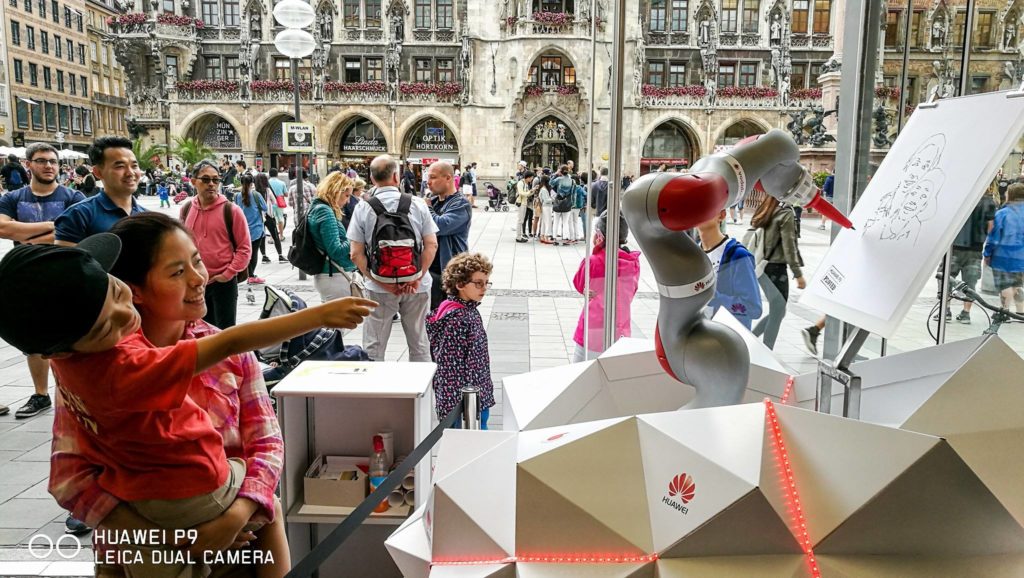
A growing application area, service and hospitality robots are now moving from fun demos at trade fairs into genuinely useful real-world tasks. Here, the robot’s visual appeal matters just as much as operational metrics like throughput and cycle time.
Applications to which JAKA robots are being deployed include serving at coffee stations, bartending, and operating in smart kitchens.
Programming Options for JAKA Robots
JAKA robots offer three main programming approaches:
- Graphical Teach Pendant Programming — The company’s teach pendant runs on a mobile interface accessible from a teach pendant, a computer, or an app. The primary programming language is somewhat similar to the graphical programming language Scratch, though it is proprietary and not exactly the same.
- Freedrive Hand-Guiding Teaching — JAKA’s Freedrive mode allows you to move the robot physically through the required trajectories by pressing the FREE button on the robot’s end flange. This is useful for quick, rough online programming.
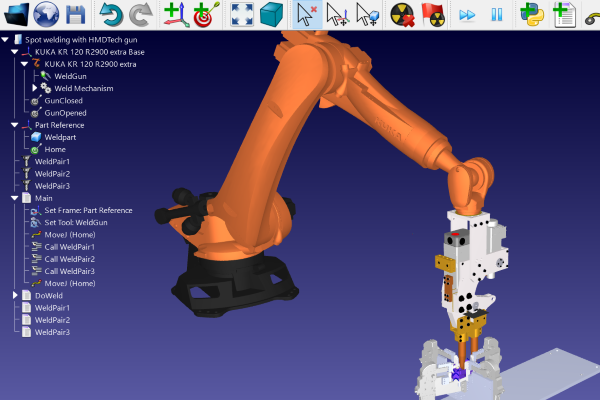
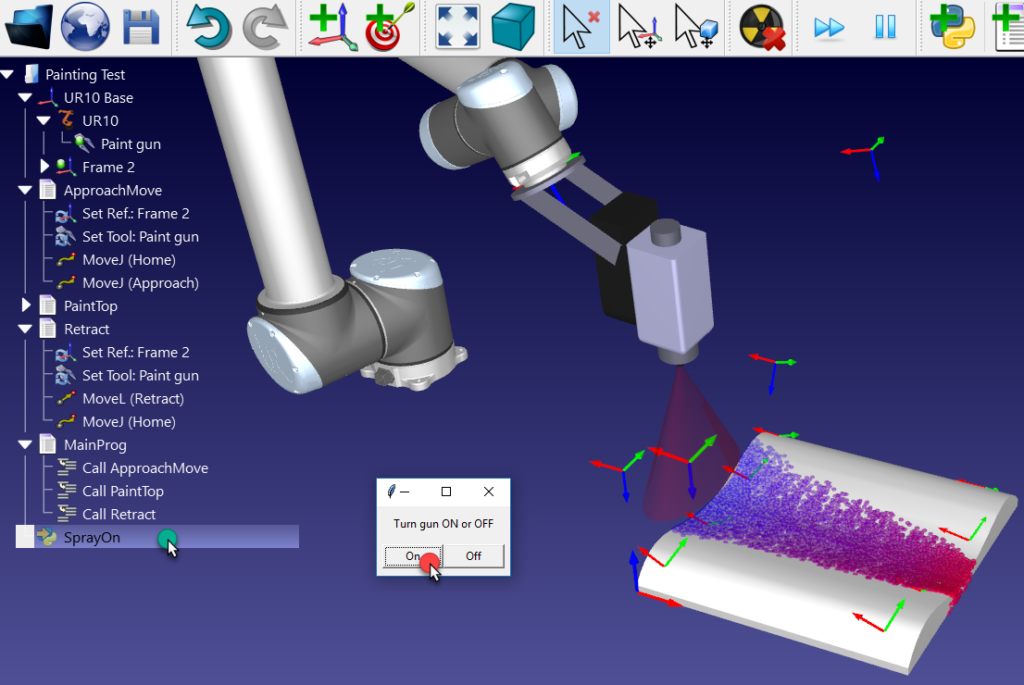
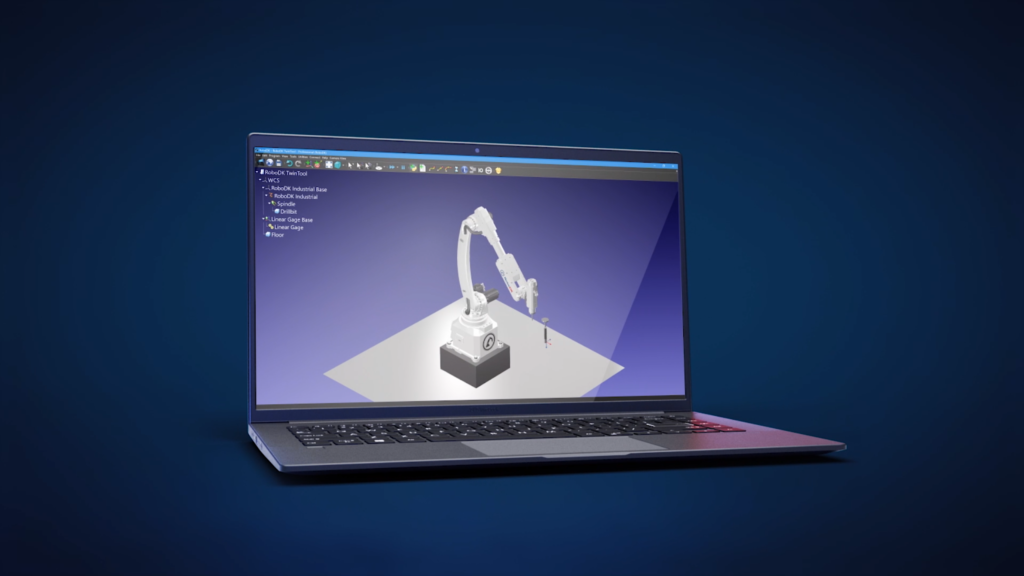
- RoboDK Offline Programming — If you want to get even more from your JAKA robot, RoboDK provides a comprehensive set of functionalities including collision detection, multi-robot setups, and seamless CAD/CAM integration. With a vendor-neutral programming environment, RoboDK already supports a wide range of JAKA robots alongside 900+ other models.
Spotlight on 3 JAKA Models in the RoboDK Library
The RoboDK Robot Library already includes a range of JAKA models which you can load into a simulator and start programming immediately.
Three of the supported models include:
Robot 1: JAKA K1

One of the few dual-arm robots on the market, the K1 includes two synchronizable 7 DoF arms that mimic human arm movement.
Each arm has a payload capacity of 3-5 kg, a reach of 600-766 mm, and a repeatability of 0.05 mm. The system is best suited to complex assembly tasks and other applications requiring two coordinated arms in a compact workspace.
The RoboDK Library includes models for both the Left Manipulator and Right Manipulator.
Robot 2: JAKA Zu30

With a high payload capacity and IP65 ingress protection, the Zu30 is at the larger end of JAKA’s robot range.
The model offers 30 kg payload capacity, a reach of 1,350 mm, and a repeatability of 0.05 mm. It is suitable for heavy-load handling, palletizing, and precision welding.
Download the Zu30 model from our Robot Library.
Robot 3: JAKA MiniCobo

On the small end of JAKA robots, the MiniCobo is designed for commercial and light industrial use where cost effectiveness, lightweight design, and simple deployment are top priority.
This tiny model, weighing just 9 kg, offers a 1 kg payload capacity, a reach of 580 mm, and a repeatability of 0.1 mm. It is well-suited to tasks like dispensing, simple assembly, and light material handling.
Download the MiniCobo model from our Robot Library.
Looking Ahead: JAKA’s Position in the Collaborative Robot Market
In just over a decade, JAKA has grown from a Shanghai startup focusing on the dairy industry into an impressive global cobot manufacturer with an extensive range of application-specific collaborative robots.
If you want to get the most out of your JAKA robot, consider programming with RoboDK. With its simulation-first offline programming workflow, you can reduce deployment time while also providing access to advanced automation workflows that integrate seamlessly with your CAD/CAM workflow.
To get started, download a trial copy of RoboDK and load your chosen JAKA model from the integrated library.
Which JAKA robot would best suit your needs? Join the discussion on LinkedIn, Twitter, Facebook, Instagram, or in the RoboDK Forum.. Also, check out our extensive video collection and subscribe to the RoboDK YouTube Channel